Why do more cyclones form in the Bay of Bengal in October and November? Scientists explain
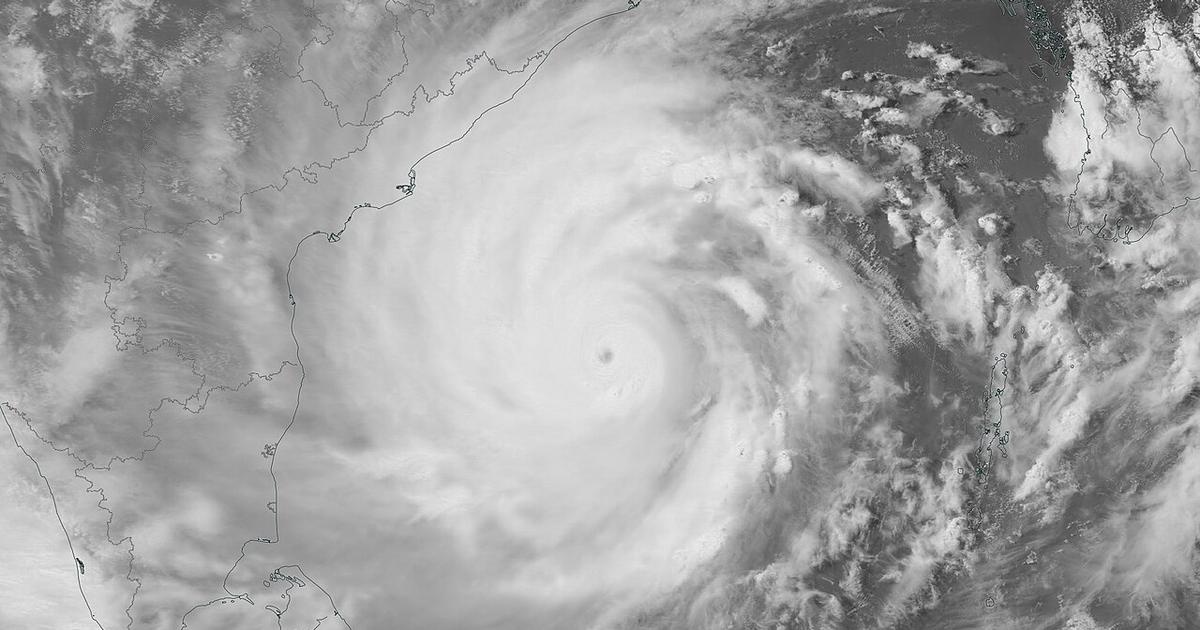
Murasu, Arnab, Hudhud, Titli, Montha, Okhi - the cyclones of recent years share one thing in common: all of them formed in October or November. Most of the cyclones that form in the Bay of Bengal each year arise in these two months, the India Meteorological Department says.
To find out why more cyclones form in October and November, scientists from the meteorological department and the Indian National Centre for Ocean Information Services (INCOIS) were asked.
The meteorological department began counting cyclones in 1891. Its data show that between 1891 and 2025, a total of 1,261 cyclones and severe cyclones formed in the Bay of Bengal. Of the 541 cyclones that formed over the sea, 96 formed in October and 126 in November. Likewise, of 247 severe cyclones, 44 occurred in October and 76 in November. The cyclones forming in these two months are also more intense.
"Sea temperature plays a key role in cyclone formation," said INCOIS scientist P. Sivaiah. "Sea surface temperature peaks in two seasons: in March, April and May, and again in October and November."
K. Nagaratna, director of the Amaravati Meteorological Centre, said most cyclones form over the east coastal regions after the southwest monsoon withdraws. "Low pressure areas forming in the Pacific Ocean enter the Bay of Bengal through the Andaman Sea. Before the monsoon, sea temperatures are higher near the Myanmar coast, so cyclones move in that direction. But after the monsoon withdraws, sea surface temperatures rise along India's east coast, so cyclones move towards the east coast. The movement of winds also contributes," she explained.
During this period the Bay of Bengal's temperature averages above 26.5 degrees Celsius, she added. Because such warmth is an essential factor for a cyclone to form, this is why coastal states and neighbouring countries including Sri Lanka follow cyclone warnings closely in October and November.